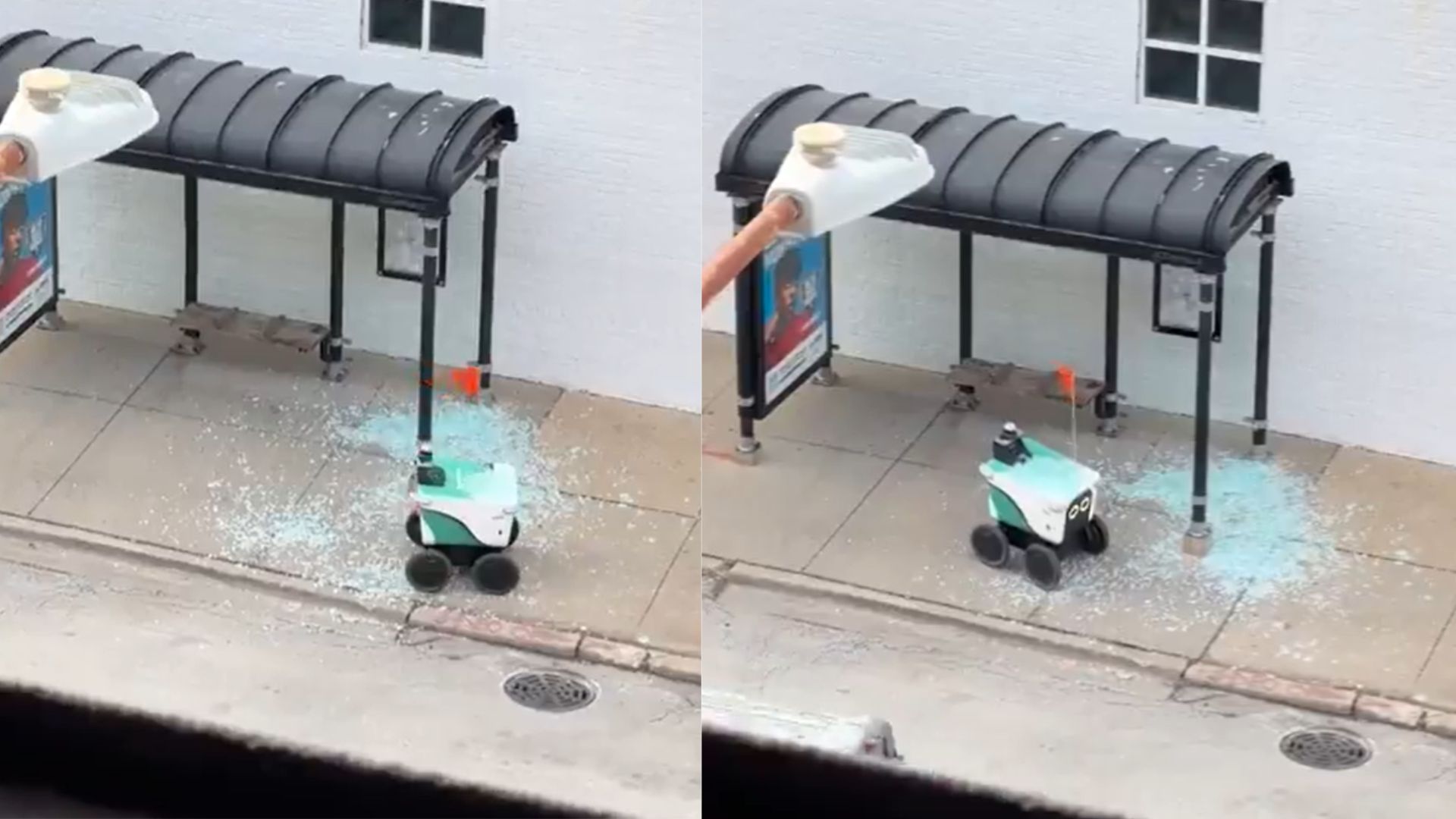
Autonomous delivery robots are pitched as the future of urban convenience. In Chicago, that future just crashed through a glass bus shelter.
The incident, captured in widely shared footage, adds to growing concerns about the safety and behavior of autonomous delivery machines in dense urban environments.
The video shows the aftermath rather than the moment of impact.
A Serve Robotics unit appears covered in shattered glass, jerking slightly before moving aside. A passerby records the scene as debris litters the pavement.
Sidewalk chaos concerns
Residents in Chicago have already raised alarms about delivery robots crowding sidewalks and creating hazards.
This latest incident reinforces those fears.
The robot’s presence at the scene, combined with visible damage, has fueled assumptions about its role in the crash.
The uploader claimed a Serve employee later retrieved the robot but did not clean the debris.
According to the same account, a worker from JCDecaux eventually cleared the glass from the site.
Serve Robotics acknowledged the incident in a statement to 404 Media and confirmed a response team handled the situation.
“We’re aware of the incident involving one of our robots in Chicago. No injuries were reported, our team responded quickly to clean up, and we’re reviewing what happened to make improvements,” the spokesperson said.
“We have also been in contact with local stakeholders and are committed to addressing any concerns directly. We take this matter very seriously.”
Robots vs city life
The incident highlights broader tensions between automation and urban life.
Critics argue these robots obstruct pedestrians and compete with human delivery workers.
Others worry about onboard cameras and constant data collection in public spaces.
Chicago has become a focal point for this debate. Both Serve and Coco have expanded operations in the city in recent years. However, resistance has grown just as quickly.
In February, Alderman Daniel La Spata moved to block delivery robots from his district.
A local survey showed strong opposition among residents. More than 80 percent rejected the idea of robots operating in their neighborhood.
Public pushback extends beyond policy. At least 3,600 residents have signed a petition calling for a citywide ban on sidewalk robots.
This is not an isolated incident. Delivery robots have faced repeated issues across US cities. In Miami, a Coco robot stopped on train tracks and was destroyed by an oncoming train.
In Los Angeles, activists have documented robots overturned or disabled in public spaces.
In one case, a Serve unit entered an active police scene.
Authorities later determined that incident involved a false alarm, but officers were actively investigating at the time.
Serve launched its Chicago operations in September through a partnership with Uber Eats.
The company continues to test its systems in real-world conditions, but incidents like this raise questions about reliability.
For now, the broken bus shelter stands as a visible symbol of the challenges facing sidewalk automation.
Chicago residents remain divided on whether the technology belongs in their city.