Keeping up with accumulating dust is about as daunting as attempting to track who’s mad at whom on the latest season of Real Housewives. Despite the fact that my house cleaner comes once a month, I find myself frequently spotting thin layers of dust building up on baseboards, vents, glass coffee tables and more.
What we call “dust” is actually a combination of many things, according to Christopher S. Baird, Ph.D., associate professor of physics at West Texas A&M University. The most common components of dust include dirt, pollen, pet dander, dead skin and hair cells, as well as small fibers that come off of clothing or furniture. With all of those potential sources, it’s no wonder dust comes back quicker than our desire to book another trip.
Typically, I tackle dust on my own with a microfiber cloth and wood or glass cleaner. But after scrolling through social media recently, I saw several people raving about another potential solution: The Damp Duster. Declaring it “my fave dusting tool ever” and “pretty amazing,” and raving that “I got one, and I will not live without it,” it’s clear that the Damp Duster has amassed a vocal fan club. So I ordered one myself to see if it’s as effective as the social media superfans say.
What Is the Damp Duster?
Released about five years ago, the Damp Duster has an impressive family tree. The ridged, chalkboard-eraser-size product is part of the Scrub Daddy empire. The brand skyrocketed in popularity after appearing on season four of Shark Tank in 2012. To this day, it’s the pitch-the-investors reality show’s most successful product.
The Scrub Daddy scouring pad’s popularity has bloomed into several spin-offs, including now Dish Daddy (a small Scrub Daddy pad on a soap-dispensing wand), Eraser Daddy (a Magic Eraser competitor), and BBQ Daddy (which cleans grimy grill grates with a stainless steel pad rather than risky bristles). Oh yes, and the Damp Duster, which the brand says “collects and traps dust in one quick wipe. Perfect for blinds, vents, baseboard, railings, mirrors and more!”
The Damp Duster has the consistency of a stress ball, and arrives pre-moistened in a plastic wrapper. Use it to catch dust, the team suggests, then rinse clean under running water. Simply dampen with water before each dusting shift, and you can reuse it “time and time again,” they say.
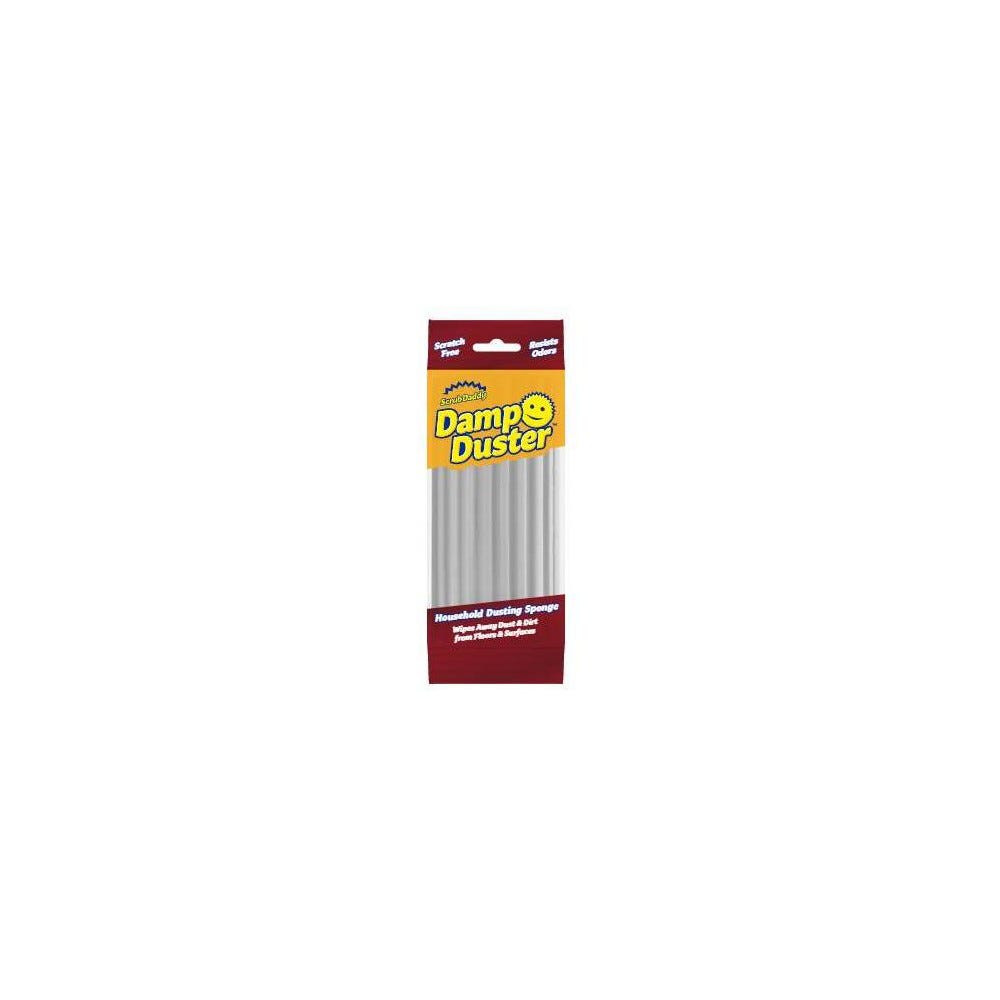
$3.99
Shop Now
Putting the Damp Duster to the Test
I found the Damp Duster available for $3.99 at Target, and put it to use almost immediately after I brought it home. It was ready to get to work straight from the package; slightly moist (the name really makes sense now!) and pliable.
Considering it was damp, I was skeptical that it would be able to leave glass streak-free. So the first spot I tried was my glass-topped TV stand. It conquered all three levels of the furniture, trapping nearly all of the visible dust and leaving a shiny coat on the surface. This was possible with a single swipe; no multiple passes or scrubbing required.
Next, I gave the tool a daunting task: Cleaning the neglected top of my refrigerator. Again, it caught the dust and left no trace, with no sprays or cloths required. Since I was in the area, I also ran the Damp Duster across the top of my metal toaster oven. While it couldn’t reach inside the slats in the vents, it alerted me that the top was much dustier than I imagined.
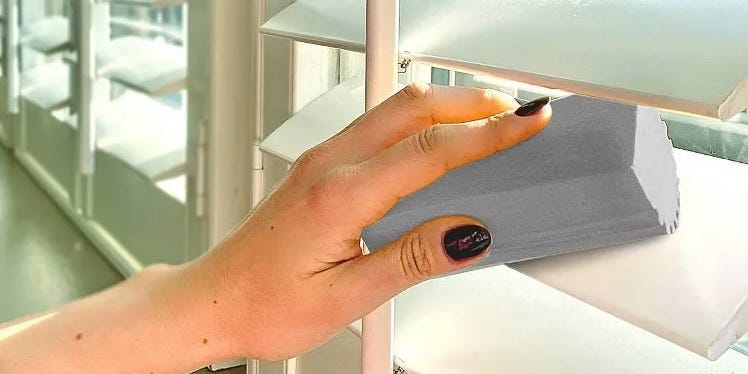
Lastly, I decided to tackle the blinds in my bedroom. There’s no real easy way to take on all the slats; however, this is the easiest I’ve found. Simply close the blinds and run the Damp Duster across the surface, and it catches nearly all of the dust that’s been hanging on.
After being quite impressed with the results, I reached out to Brandon Pleshek, an Appleton, Wisconsin-based professional cleaner and the founder of Clean That Up, for his expert opinion: “I’ve used the Damp Duster, and I love it. When I first saw the videos, I will be honest, I was pretty skeptical. A lot of viral cleaning tools look amazing online but do not always live up to the hype,” Pleshek admits. “After actually using it, I get why people like it so much. It really does pick up dust easily instead of just pushing it around, which is always what I am looking for as a professional cleaner. I also love that when it gets dirty you can just rinse it out and keep going from room to room.” The Damp Duster earns bonus points from Pleshek because “it’s reusable and lasts a long time.”
That said, it does take a tiny bit of TLC on the part of the user. Moisten it too much, and the Damp Duster will drip and leave puddles or spots. To remedy this, simply squeeze the excess moisture out of the product until it lives up to its “damp” name. On the flip side, allow it to dry, it will feel rock hard and unusable. If that happens to you, Pleshek urges, “don’t throw it away! All you need to do is run it under some water for a few seconds and it will soften right back up. Once it is flexible again, you are ready to keep dusting. I have had some followers assume it is ruined, but it is really just part of how the material works.”
My Official Scrub Daddy Damp Duster Review
So will this be a permanent remedy for dust? After trying it that day, and keeping the Damp Duster handy for touch-ups over the following week (it also works great on cool flat-top oven surfaces), I agree with Pleshek that it can be part of the solution. And at just $4, the Damp Duster is a fairly low-risk investment.
It can be used on many surfaces, including electronics like keyboards, and the manufacturer confirms that the Damp Duster is safe to use on sealed wood, such as bedside tables.
“My go-to dusting tools are high-quality microfiber towels for electronics and mirrors, a Damp Duster for baseboards, blinds, and flat surfaces, and a Swiffer for floors. Each one serves a different purpose depending on what I am cleaning. All of these actually grab and hold dust instead of just spreading it around into the air,” Pleshek says. “That is really the goal of effective dusting. You want removal, not redistribution.”
While it’s impossible to completely eliminate dust, you can absolutely reduce it, Pleshek says, and a multi-tool attack—as well as improving your air quality by running an air purifier and changing your HVAC filter regularly—can certainly move the needle.
“Dust is a never-ending battle, but when you combine good habits like proper tools and good airflow management, you will notice a big difference,” Pleshek says.
Bonus Dusting Tips From the Pros
Regardless of whether you use the Damp Duster or your own toolkit, here are a few other pro tips from Pleshek and Leslie Reichert, a Northbridge, Massachusetts-based cleaning coach to help you stay ahead of dust.
- Retire certain tools. “If you are using dry paper towels or feather dusters, you are often just pushing dust around instead of removing it,” Pleshek says.
- Skip the polish. Reichert is often asked by clients for her recommendations for the best polish for dusting. Her answer? None. “Polish does leave your furniture looking beautiful, but it also attracts dust and makes it much harder to get the dust off. The dust mixes with the oils and it can really cause build-up,” she says. “Instead, I suggest using a dry microfiber cloth [she loves E Cloth] to remove the dust. If you notice some build-up, dampen the cloth and it should swipe right up.”
- Time things right. Reichert and Pleshek agree that dusting is best to do once each week. “If you have pets, kids, or allergies, you may want to dust high-traffic areas two times per week,” Pleshek says. “Consistency beats deep cleaning. A quick weekly dusting prevents that thick layer from ever forming, and makes cleaning much easier long-term.”