My husband and I have a problem. We spend a lot of time outdoors—he’s the kind of person who considers a weekend without a trail or a river a personal failure, and I’m a trail runner, so my idea of a vacation involves elevation gain and electrolyte tabs.
We camp often, and we camp with gear. Not glamping, but not roughing it on a bedroll either. We have a camp fridge, a Garmin that needs charging, a CPAP machine, lights, a camp stove fan, and the general expectation that we won’t come back to civilization depleted. That means we need serious portable power, and we’ve burned through our share of disappointments in that department.
The Ampace Andes 1500 is not a disappointment.
$499.00
Shop Now
What You’re Actually Getting
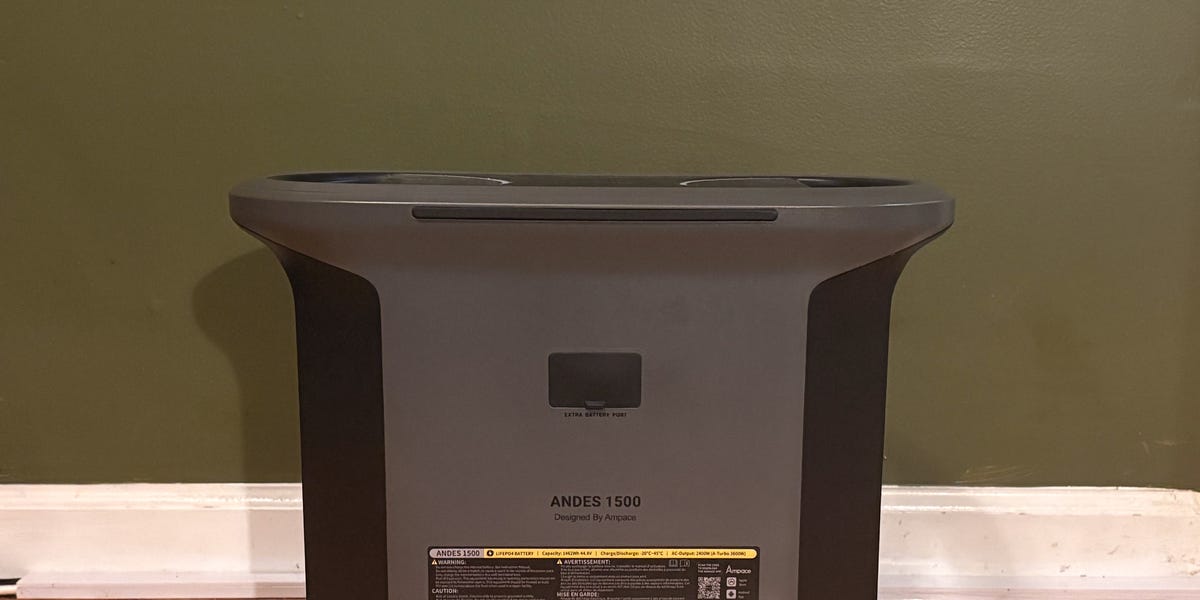
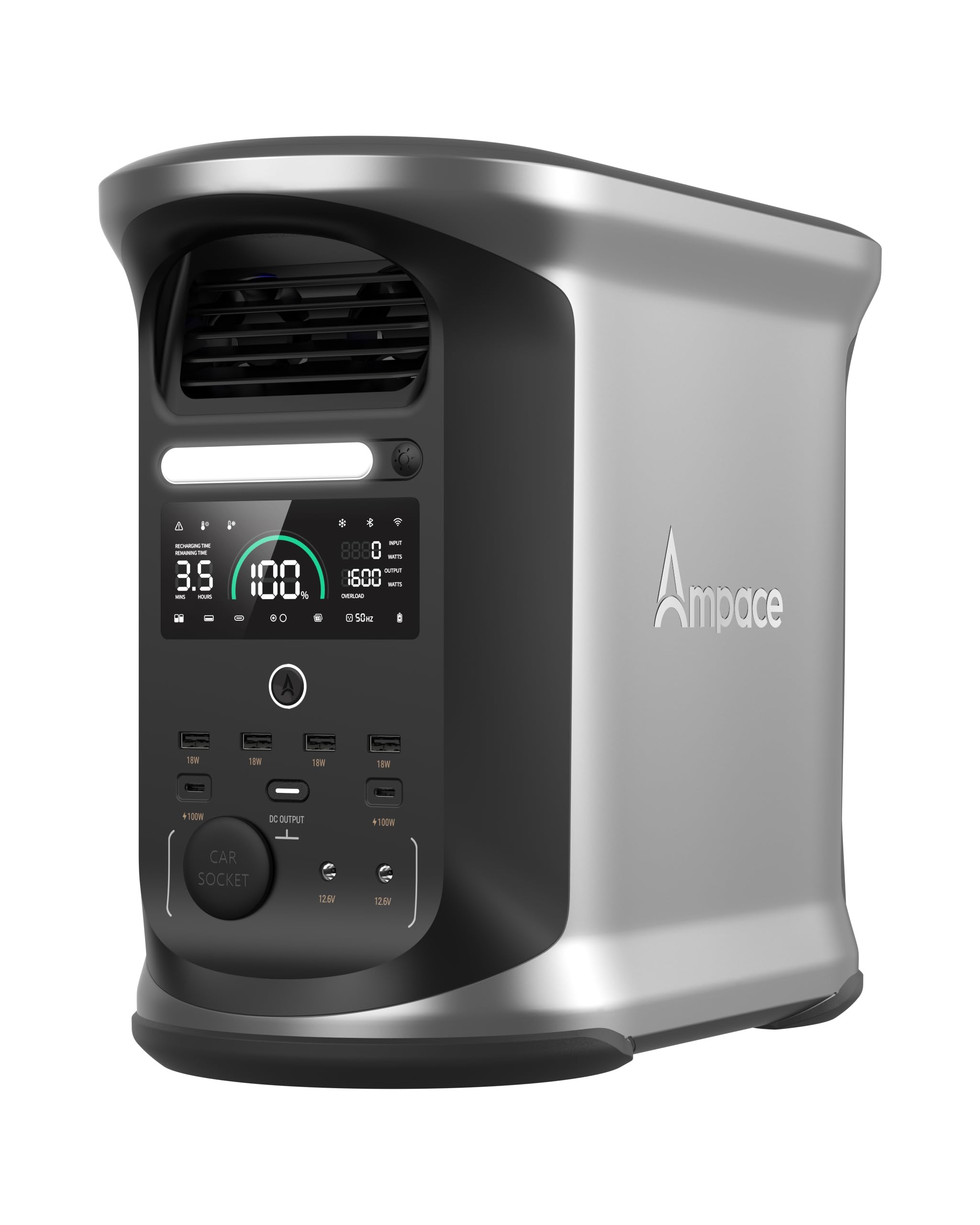
The Andes 1500 packs 1,462 watt-hours of capacity and 2,400 watts of continuous AC output, with a 3,600-watt max output—that last number matters when you’re starting a compressor fridge or a fan motor, which pulls hard on startup before settling down. The port situation is generous: four AC outlets, four USB-A, two USB-C PD, a car socket, and two DC5521 ports, totaling 13 outputs running simultaneously. At camp, we’ve had the little electric cooler from Dometic, the camp lights, both of our phones, and my GPS locator all pulling from it at once without drama.
The battery chemistry is LiFePO4—lithium iron phosphate, the same cell technology going into electric vehicles, chosen specifically because it’s thermally stable, doesn’t degrade catastrophically in temperature swings, and holds its capacity over time. Ampace rates it for 6,000 cycles while maintaining more than 80 percent capacity, for a projected lifespan exceeding 15 years. We’re not replacing this thing every three years. That alone separates it from most of the competition.
Charging Speed Changes Everything
Here’s the thing nobody tells you about portable power stations until you’re on day three of a camping trip staring at 12 percent battery: recharge time is the whole game. A ton of capacity means nothing if you can’t refill it before the sun goes down.
The Andes 1500 hits full charge in 55 minutes via AC using Ampace’s A-Boost technology that’s 50 percent faster than competing units, according to Ampace. We top ours off at the trailhead before I head out for a long run and my husband sets up camp. By the time we’re back and hungry and sweaty, it’s full. That’s a completely different relationship with a power station than I had with our previous one, which we basically had to babysit overnight.
For truly off-grid situations, solar input maxes out at 600 watts, and with a full panel setup, you’re looking at a complete recharge in 3 to 5 hours of decent sun. Mountains cooperate on this more than you’d think. We run three 200-watt panels on longer trips and it’s genuinely self-sufficient in good weather. Bad weather is what the big starting capacity is for.
Performance at Altitude, Plus Quiet Operation
For power stations, temperature tolerance and noise are two things that really matter when you’re camping. If you’re waking up to 28°F at altitude, you need your gear to function. The Andes 1500 operates in temperatures from minus 4°F to 113°F, which covers everything from shoulder-season mountain camping to baking desert summers.
On noise: my husband uses a CPAP. This is non-negotiable equipment, not a comfort preference. Running it off a power station that sounds like a box fan defeats the purpose. The Andes 1500’s sleep mode drops to 30 decibels—quieter than the creek we camp next to. He sleeps fine. I sleep fine. The whole campsite sleeps fine.
The ambient LED lights on top turned out to be more useful than I expected—inside the tent at night, they double as a soft camp light without needing to dig out a lantern. The lights are color-programmable via the app, which also handles real-time power monitoring. It’s the kind of feature that sounds gimmicky until 10 p.m. when you need to find your headlamp and don’t want to flood the tent with white light.
The Expandability Factor
This is where Ampace makes a smart long game argument: you can connect up to seven expansion batteries, pushing total capacity all the way to 11 kilowatt-hours. We haven’t needed that. But for extended base camping, or for the trips where we bring more people, more gear, and the camp kitchen gets ambitious, knowing the system can grow is genuinely reassuring. You’re buying into a platform, not just a single unit.
Wrap-Up
The Andes 1500 runs about $599 with a solar panel and $499 without. For what it does, and for how long it will do it, that’s not a hard sell. It’s the power station I stop thinking about at camp, which is exactly what I want from my gear.
Shop Now