WAYNE COUNTY, MI – As anxiety grows that power-hungry data centers could drive up power bills and keep Michigan hooked on fossil fuels, some advocates say a new deal between the state’s largest power company and tech giant Google represents an important step in the right direction.
Last week, DTE Energy asked the state to approve contracts to serve a proposed 1-gigawatt data center in Van Buren Township, drawing as much power as some 750,000 homes.
It came shortly after Google revealed itself as the potential end user of the 280-acre “Project Cannoli” data center campus project off I-275, I-94 and Haggerty Road west of the Detroit Metropolitan Airport.
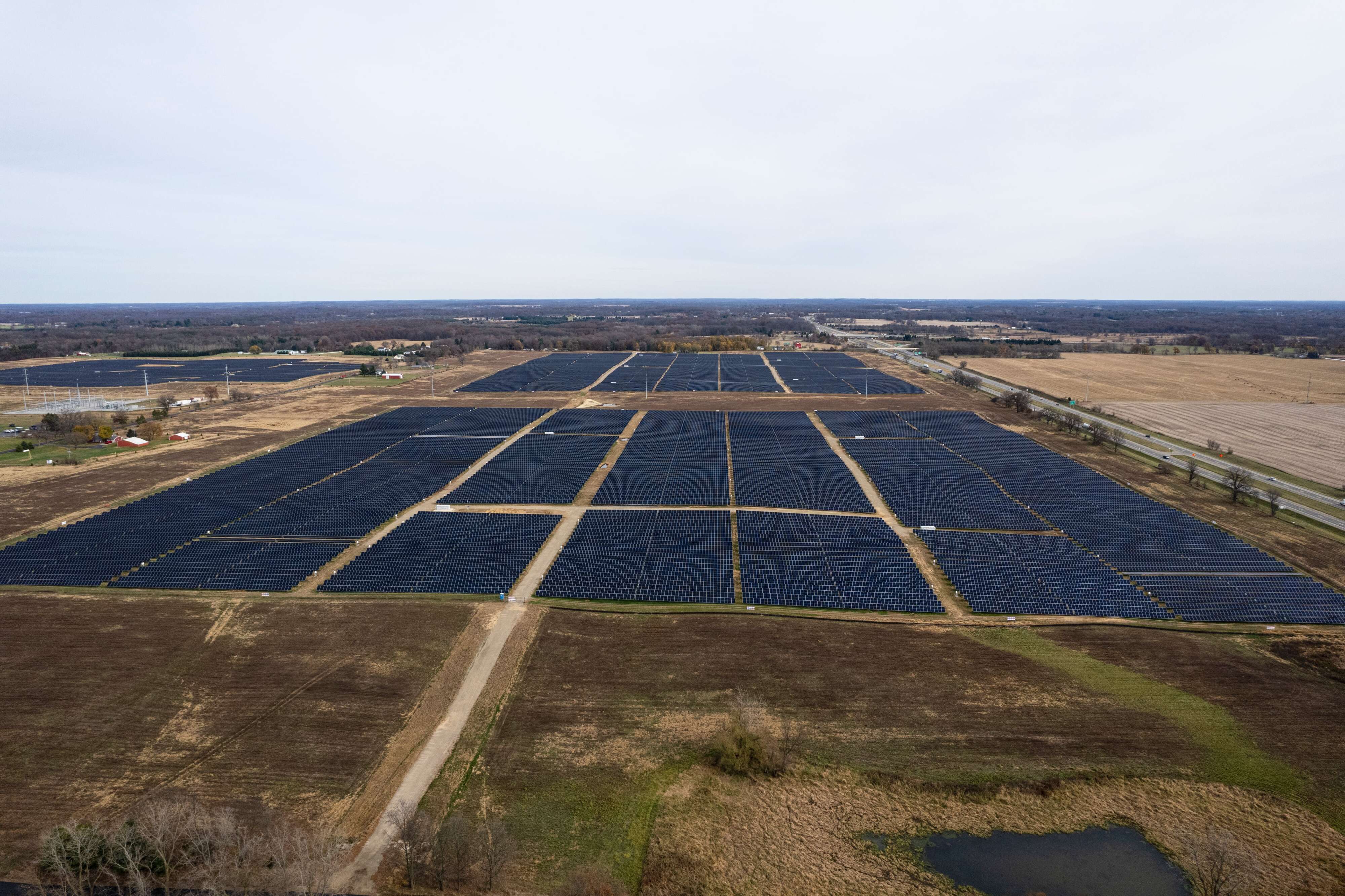
The deal includes commitments that Google will cover the costs of bringing the data center online, plus a massive 2.7 gigawatts of power added to DTE’s grid through new renewable energy projects, batteries and demand flexibility.
“It’s not to say that there is stuff in here that does not worry me, but I do think that it is important to acknowledge that they are going the route that we are asking data centers to go,” said Charlotte Jameson, chief policy officer for the Michigan Environmental Council.
If approved, it would become the state’s second “hyperscale” facility stuffed with servers for cloud computing and artificial intelligence to get the green light.
In December, regulators OK’d separate DTE contracts to serve a sprawling data center in Saline Township, south of Ann Arbor, for ChatGPT creator OpenAI and global tech firm Oracle, now under construction.

They did so amid protests and widespread criticism that DTE sought to rush the process, requesting speedy approval without the opportunity for formal legal scrutiny from consumer watchdogs, business groups and environmental organizations.
Not so for the new deal between DTE and Google.
The contracts, filed March 17 with the three governor-appointed energy regulators on the Michigan Public Service Commission, will go through a nearly six-month “contested case.”
During that time, outside groups can conduct discovery, cross-examine witnesses and test DTE’s claim that the deal will offer substantial affordability benefits to its existing customers over the 20-year lifespan of the contracts.
Google made a “direct commitment” to Michigan Attorney General Dana Nessel for this slower, more detailed review “having obviously learned a lesson from the Oracle/OpenAI boondoggle in Saline,” Nessel said in a statement last week.
Like with the Saline Township project, DTE has filed redacted versions of its contracts with Google, though advocates said the contested case will likely allow them to review the full agreements under non-disclosure restrictions, unlike with the Oracle data center project.
Only commercially sensitive information is blacked out, said DTE spokesperson Jill Wilmot, and items related to rates and cost of service are publicly available.
In statements, Wilmot and a Google spokesperson said they were committed to transparency. Google has a longer timeline, allowing DTE to use the contested case process, Wilmot said.
Google will pay for big grid additions
Beyond that difference in process, advocates say the proposed deal offers potentially stronger safeguards for ratepayers and significant commitment to carbon-free energy sources — though all that depends on regulators holding the companies to the commitments.
“This definitely is a step upward from the Oracle proposal, and we just have to see if the details are all there,” said Douglas Jester, an energy policy consultant with 5 Lakes Energy who frequently works on behalf of consumer advocates like the nonprofit Citizens Utility Board of Michigan.
Under the contracts, Google is committing to pay the full cost of 1.6 gigawatts of renewable energy projects like solar farms, 480 megawatts of grid-scale battery storage and 300 megawatts of additional electric capacity from the regional market.
It is also committing to 250 megawatts of “demand response,” reducing usage when the grid is under strain.
Google has said the additions significantly exceed the maximum power draw of the data center because the projects don’t generate power 24/7.
The commitments mostly reflect Google following through on its larger promise to rely on clean energy, Jester said. “But the way that they do it, where they bring the resources, some of the resources themselves and that they commit to paying for what DTE provides to them fully means that it’s also good for DTE’s other customers.”
Jester and other advocates said they worried about how fast DTE could get new projects like solar farms online. He cited delays in projects getting permission to hook up to the regional grid, a process known as “interconnection.” Hundreds of projects wait years to plug in.
If it moves ahead, the data center would begin drawing power in December 2027 and ramp up to its maximum by December 2028, according to DTE filings.
Wilmot, with DTE, declined to answer a question about renewable delays, saying groups will have the opportunity to formally express concerns and back them up as part of the regulatory process.
DTE maintains it is on track to meet its requirements under Michigan standards to ramp up reliance on clean and renewable energy in the coming years, even with the data center. It will also not alter plans to close its remaining coal plants, the utility says.
DTE says data centers benefit other customers
As DTE has courted new large customers like Google, it has repeatedly said rising power demand from data centers will put downward pressure on power rates.
“Michigan is well positioned to be a national model for how to realize the economic benefits of data center technology in our communities in a responsible way,” said DTE CEO Joi Harris while announcing the deal last week.
Read more: Indiana power company says data centers will help it lower rates. Is Michigan next?
But a boom in large-scale data center projects across the country has raised concerns the opposite could happen. Critics cite higher prices from tightening power supply in some regions or costs from big transmission line projects that are traditionally shared across all kinds of power customers.
Others worry what might happen if the development frenzy spurred by AI eventually fizzles out, after utilities have invested billions in new power plants and infrastructure they rely on customers to fund.
DTE aims to protect against that possibility with safeguards like a 20-year contract term, required minimum billing for Google equivalent to 80% of its contracted power demand and a termination payment that could amount to nearly $2.5 billion if it closes up the data center early.
When it comes to costs needed to serve the facility, DTE says the tech firm will pay for up to $50 million in power distribution upgrades. DTE will ensure increased power sales offer a net benefit to customers who may share the costs of $308 million in transmission upgrades for the project, according to its filings.
Google has agreed to comply with any future regulatory order ensuring that it fully covers its costs, DTE says.
The data center will spread the fixed costs of running the grid over a larger volume of sales, helping drive $1.7 billion in benefits to other customers over the life of the contract, the utility maintains.
But some advocates say it’s premature to say whether the data center will be a help or burden to utility customers, and they plan to fact check DTE’s modeling.
Jameson said she’s concerned data centers could lead DTE to run its fossil fuel power plants more, saddling residential customers with a sizeable chunk of operational and fuel expenses.
“There are these hidden, embedded costs in the system that we really need to figure out. Are those costs going to be outweighed by the benefit of increased sales or is there still a little bit of a mismatch there?” Jameson said.
Some of those details are likely to be worked out in future regulatory cases when DTE proposes increased rates, she said, and regulators have ordered utilities to present modeling for how the costs are allocated in those venues.
Regulators with the Public Service Commission declined to comment on the Google data center contract case, citing general practice against discussing pending proceedings.
DTE has requested expedited consideration, with a decision on the contracts by Sept. 10.
©2026 Advance Local Media LLC. Visit mlive.com. Distributed by Tribune Content Agency, LLC.